WHY DIABETICS NEED A YEARLY EYE EXAM
Having diabetes can damage your eyes. Diabetics are at higher risk of developing diabetic retinopathy, a leading cause of blindness in American adults. A comprehensive medical eye exam can help you maintain healthy eyesight.
WHAT IS DIABETIC RETINOPATHY?
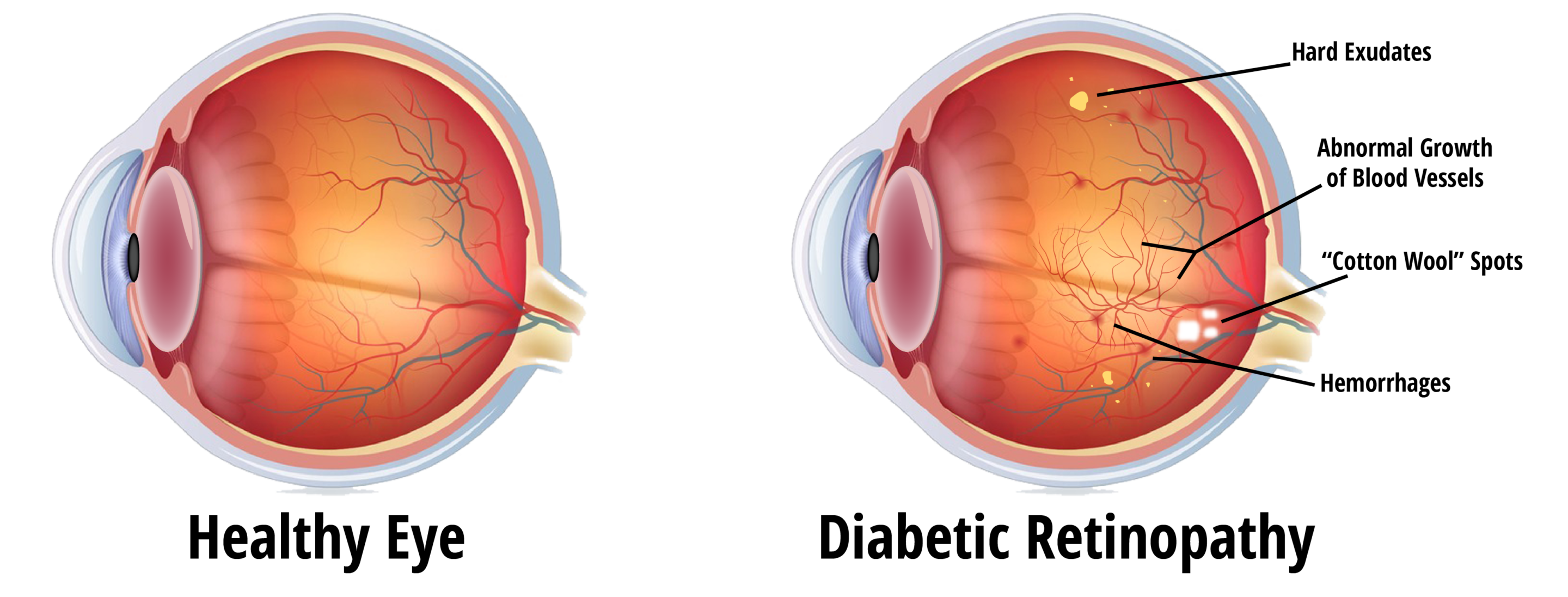
Diabetic retinopathy affects blood vessels in the light sensitive tissue that lines the back of the eye called the retina. It is the most common cause of vision loss among people with diabetes and the leading cause of vision impairment and blindness among working-age adults.
Diabetic macular edema (DME) A consequence of diabetic retinopathy, DME usually takes on two forms:
- Focal DME, which occurs because of abnormalities in the blood vessels in the eye.
- Diffuse DME, which occurs because of widening and swelling of retinal capillaries (very thin blood vessels).
DIABETIC EYE DISEASE ALSO INCLUDES:
Cataracts are a clouding of the eye’s lens. Adults with diabetes are 2-5 times more likely than those without diabetes to develop cataracts. Cataracts also tend to develop at an earlier age in people with diabetes.
Glaucoma is a group of diseases that damage the eye’s optic nerve—the bundle of nerve fibers that connects the eye to the brain. Some types of glaucoma are associated with elevated pressure inside the eye. In adults, diabetes nearly doubles the risk of glaucoma.
All forms of diabetic eye disease have the potential to cause severe vision loss and blindness.
HOW A DILATED MEDICAL EYE EXAMINATION CAN HELP PREVENT DIABETIC EYE DISEASE
In its early stages, diabetic eye disease often has no symptoms. A dilated medical eye exam allows us to examine your retina and optic nerve more thoroughly for signs of damage before you notice any change to your vision. Frequently monitoring your eye health allows us to begin treatment as soon as possible if signs of disease do appear.
Ready For A Dilated Medical Eye Exam?
Visit Us!
10010 E 81st Street.
Tulsa, OK 74133
918.250.2020 ph | 918.250.8910 fax